A free resource library
Simple, evidence-informed support for children, young people, and the parents caring for them — at every stage of life.
3 Wee Tips was created to bridge the gap between clinical expertise and everyday family life — making evidence-informed support genuinely accessible to every parent and young person who needs it.
This is about being kind to yourself when things are hard, trying your best, being realistic with your targets and really believing you can. It is about understanding that it takes practice and you will wobble a bit along the way!
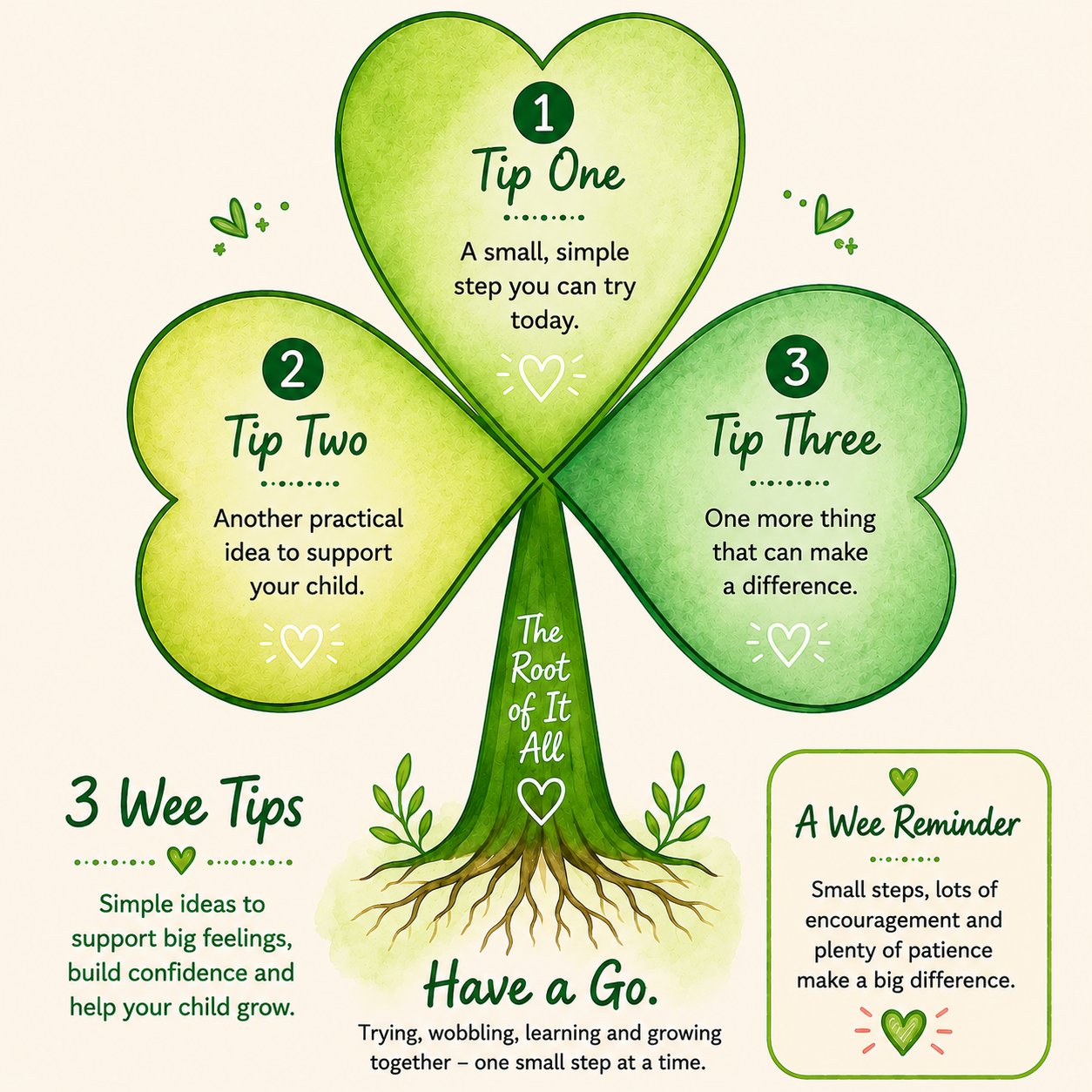
Small steps, lots of encouragement, and plenty of patience make a big difference.
Every child wobbles. Every parent doubts. That's not failure — that's learning. The 3 Wee Tips philosophy is rooted in the belief that confidence grows through trying, not through getting everything right first time.
Children learning to walk or ride a bike don't give up when they wobble and fall — with gentle encouragement, they get back up and keep going. Confidence, resilience, and emotional strength grow in exactly the same way: through having a go, making mistakes, and trying again. Growth is messy. It's also remarkable — like a rainbow in the Irish sky.
No jargon, no overwhelm. Each guide follows three clear steps so you always know what to expect.
A short explanation that helps you understand what your child is experiencing — and why it's completely understandable.
Three practical, manageable ideas you can try straight away. No grand gestures — just small, meaningful steps.
A hopeful takeaway to carry with you — because you're doing better than you think.
From toddler tantrums to university anxiety, shamrock guides are organised by age and stage — so you always find what fits.
"Why I made this library — a wee hello."
Short video · coming soonA gentle two-minute welcome — what the 3 Wee Tips are, how each card works, and how to get in touch if you'd like a little more support.
— The 3 Wee Tips philosophy
Resources designed to fit into the reality of everyday family life — accessible, manageable, and always encouraging.
A searchable collection of shamrock guides covering everyday challenges across every age group.
Download and print shamrock guides to keep on the fridge, pop in your bag, or screenshot for your phone.
Book ahead to join monthly live sessions for parents of under-sevens to ask questions and connect with others on the same journey.
Calm, conversational videos introducing key topics — no jargon, no overwhelm.
Explore the library, try one small tip, and see what a difference a little warmth and encouragement can make.
"A short video — coming soon."
Video will appear hereMy child is having a meltdown.
Stay calm and unflappable. Take one deep, slow breath out.
Acknowledge your child's big feeling — for example, "I can see you feel frustrated."
Gently steer your child towards a calm activity — for example, "Try playing with your lego to see if that helps you feel calm again."
Big feelings are part of normal childhood development. Your child will begin to make the connection between these big feelings and a self-soothing strategy that helped them feel calm and less overwhelmed.
© Dr Lorraine Mulholland
My child lashes out and hits and bites.
Introduce 3 simple family rules and stick them on the fridge — for example: Kind hands; No hurting; Helping and sharing.
Stay calm and give a warning. For example, "If you continue to have a tantrum, we will need to leave the park / stop the activity." If behaviour persists, always stick to what you have said and steer your child toward a more calming activity, to help teach them a way to calm down.
Try to pre-empt and help your child by steering them toward a calming activity (reading, building, music) or a physical activity — for example, jumping on the trampoline or dribbling a football.
Children learn best when you are calm and stick to clear and consistent boundaries. Always reward their efforts, however small.
© Dr Lorraine Mulholland
My child keeps getting up and won't settle in their bed.
Keep bedtime routines calm, predictable and consistent. Try a sleep chart — ⭐ Open & print the Bedtime Chart ›
Always give a five-minute warning ahead of the wind-down routine.
Use calm wind-down activities — dim lights, stories, colouring. Tell your child "Settle to sleep now and I will check you" — and always check in on them so they feel secure.
Confidence builds slowly through safe, calm, predictable and consistent routines.
© Dr Lorraine Mulholland
My child gets anxious when I drop them to the childminder, an activity or school.
Use visual boards to show your child what is happening and when.
Talk with your child about what you will both be doing during the time you are apart.
Encourage your child to take small, brave steps and praise every effort — however small.
Confidence grows gradually through small, safe experiences of separation.
© Dr Lorraine Mulholland
My child won't try new foods.
Use colourful bowls and place very small portions of food into each one. ⭐ Open & print the Trying New Foods Chart ›
Involve your child in shopping and choosing new foods — and in baking or preparing meals, allowing them to have messy hands and taste as they go.
Introduce a tiny amount of a new food on the plate just to try. Encourage them to see if they like it, and praise your child simply for trying — whatever the result.
Positive, fun experiences help children to become more confident around food.
© Dr Lorraine Mulholland
My child gets absorbed in their play and forgets to go to the toilet. My child is anxious about going to the toilet.
Work out regular time slots and encourage your child to get into the habit of going to the toilet. Gently steer them to the bathroom "to try" — no big deal if they don't actually go.
Help your child feel safe and secure — a little stool for their feet helps keep them balanced. Keep a small basket with favourite books nearby; you can read together while they relax.
Give plenty of praise — "Well done!" "Great job!" Then talk naturally about the activity they are returning to. 🚽 Open & print the Toilet Chart ›
Children learn through calm encouragement, consistent support and predictable routines.
© Dr Lorraine Mulholland
My child is having big feelings and finding it hard to understand or express how they feel.
Point to the light that shows how you feel — use the Feelings Traffic Light to help your child name and show their feeling. Print it out and pop it somewhere handy at home.
🚦 Open & print the Feelings Chart ›
Say to your child: "Let me catch that big tricky feeling in my net and help keep it safe" — then stretch your arms wide to show your imaginary net and say "Got it!" This usually grabs your child's attention and gives the feeling a name.
Steer your child to a calming activity: "Let's do some colouring / Lego / reading together." Then gently ask: "Well done — is this helping you to feel warm and cosy inside? You can point to the green light on the chart."
Big feelings are part of normal childhood development. With practice and encouragement, your child will begin to connect a self-soothing, calm activity with feeling better.
© Dr Lorraine Mulholland
Print a chart, pop it on the fridge, and colour in a star together each time your child has a go. Collect 3 stars and choose a fun activity — well done!
Always praise the effort, not just the result — every star earned is a step in the right direction.
© Dr Lorraine Mulholland
Setting the scene for Little Wins, Big Smiles.
Introduce a reward chart or collect rewards in a big jar, tin, or box. ⭐ Open & print a Reward Chart › 🌟 Open & print Collectable Rewards ›
Praise your child for all the "little" wins. For example, "That was lovely playing"; "I really enjoyed hearing that / spending time with you"; "Thank you for all your help with the gardening / table / tidying toys."
Make sure to tell all the adults who visit about all the great things your child has been doing and trying.
Children thrive on praise and encouragement. They need you to catch them being good so that they repeat that positive behaviour. Catch the positive behaviours and the little wins will bring the big smiles!
© Dr Lorraine Mulholland
My child gets very stressed and anxious about tests and exams. My child is overwhelmed with homework and school demands.
Break tasks into small, achievable steps — draw a rectangle and divide it into small chunks of time (e.g. 20 minutes) and colour code them. Set a timer to remind your child to stop and have a fun short break at the end of each chunk. Praise your child's efforts. 🧩 Open & print the One Chunk at a Time chart ›
Remind your child to come to you if they find something difficult to understand, and always reassure them that everyone finds things challenging at times.
Encourage them to have a go and reassure them that with practice they will find a way to make it feel easier.
It is completely normal for children and adults to feel overwhelmed and worried at times. Teach them to pause and acknowledge their tricky feeling, and show them how to break things into small, achievable targets — this will help them feel less overwhelmed. They will begin to make this connection the more they practise.
© Dr Lorraine Mulholland
My child puts themselves down and says things like "I'm rubbish at this" or "I'm stupid." My child gives up easily, avoids trying new things in case they get it wrong, and compares themselves to everyone else.
Acknowledge your child's feelings and gently suggest a smaller step to try. Notice when your child tries hard, keeps going, or has a go at something tricky — "I saw how you stuck with that" tells them that effort matters more than getting it perfect.
Gently challenge the unkind inner voice. When your child says "I can't do it," help them add a small word: "I can't do it yet." Show them that finding things hard is part of learning, not proof that they're no good.
Help them notice their own strengths. Each day, share one thing they did well or let them know if you enjoyed a time doing something together — an act of kindness, a good try, a fun idea. Over time these little moments build a steadier, kinder sense of who they are.
Confidence grows with each little success. Your steady, gentle warm encouragement and praise will help them to build that confidence, help them to have a go, to believe and with practice and time, to succeed.
© Dr Lorraine Mulholland
My child seems sad, flat, or tearful a lot of the time, and has stopped enjoying things they used to love. My child is more irritable, tired, or withdrawn, and wants to spend more time alone.
Keep connection gentle and steady. Let them know that you have noticed they seem a bit down and gently ask if there is anything that might help — to talk, to sit together, an activity together? Step back and let them decide — if they don't want to talk in that moment, they might come to you later. Spend small bits of unhurried time together each day and keep familiar routines going. Your calm, predictable presence helps your child feel safe and less alone, even when they can't put their feelings into words.
Do wee check-ins without mentioning their mood — just a smile as you pass by is fine sometimes; it lets them know you are there and reminds them they can come with a worry. Make space for their feelings — let your child know it's okay to feel low, feel quiet, or feel cross. You could say something like "that sounds really hard" — this can help them feel understood. Don't rush in to try and fix it. This lets them see it is normal to have uncomfortable feelings sometimes, and they can pass.
Encourage small, doable activities. A little fresh air, gentle movement, or one small step back towards something they used to enjoy can lift mood bit by bit. Keep it light and praise any effort — tiny steps count.
Low mood is common in children and often lifts with warmth, patience, and time. Trust what you know about your child. A quiet word with their teacher might be helpful, to monitor and support. If their low mood lasts more than a couple of weeks, gets worse, or starts to affect their everyday life / seems more urgent, reach out to your GP for assistance.
© Dr Lorraine Mulholland
Printable resources to help school-aged children manage worries, school stress and big feelings. Print one out and work through it together — a little at a time.
More Growing Minds resources are on the way — check back soon for new printables and activities.
© Dr Lorraine Mulholland
My anxiety is making me avoid lectures, work, or seeing people, and it's affecting my grades and friendships.
Acknowledge the thought and feeling — this helps take the power out of it. For example: "I notice that I feel anxious about going to my lecture today." Now take one big breath out, hold steady, and gently take one small step towards the thing you're avoiding. Just one manageable step (sit near the door in a lecture, message one friend, open the work for ten minutes) and let yourself feel the anxiety settle. Each small step teaches your brain that you can cope.
Settle your body first — slow your breathing with a longer breath out than in. A steadier body makes the anxious thoughts easier to handle.
Make sure to look after the basics: sleep, movement, daylight, and eating regularly.
Anxiety is very common — everyone feels anxious sometimes. Be kind to yourself, as you are feeling overwhelmed. Anxious thoughts are exaggerations of our normal thoughts; your mind is trying to protect you, but sometimes it can be overly helpful and predict danger where there isn't any actual danger. Small, even tip-toe steps will help the anxiety to settle and let you see that the uncomfortable feelings pass. If your anxiety persists and you feel that you are not coping, then make an appointment with your GP or the university wellbeing service or a Clinical Psychologist, and they will be able to help you.
© Dr Lorraine Mulholland
I put things off or avoid starting because I'm scared I'll fail — then I run out of time.
Notice that putting it off is fear talking, not laziness. Avoiding the task is temporary relief, but it also makes the fear bigger and leaves less time — which can feel even scarier. Name it gently: "I'm avoiding this because I'm scared it won't be good enough." Naming the fear takes some of its power away and helps you choose your next step.
Set yourself a small, manageable target. You don't have to do the whole thing — just start. Open the document and write one messy sentence, or set a timer for ten minutes and then have a mini break. Give yourself full permission for it to be a rough first go; remember you can always improve it. Facing the fear and simply taking one small step allows you to take another step and build from there.
Try to remember that mistakes and imperfect attempts are how everyone learns — they're not proof that you're not good enough. Aim for "good enough and finished" rather than perfect, as perfect doesn't actually exist! Treat yourself with the same kindness you'd offer a friend. If it helps, talk it through with someone you trust or your university wellbeing service.
Fear of failure is incredibly common, especially when the pressure to do well feels high. It usually grows from caring deeply, not from any real shortcoming in you. Be kind to yourself, take one small step at a time. If the fear is persistently holding you back, affecting your work or mood, or leaving you feeling overwhelmed or low, do reach out to your GP or your university wellbeing service or a Clinical Psychologist — they will be able to help you.
© Dr Lorraine Mulholland
"A short video — coming soon."
Video will appear hereStarting university has turned everything upside down and I feel completely unsettled.
Remind yourself that feeling unsettled is a normal response to big change, not a sign something is wrong. When everything familiar shifts at once, your mind and body take time to catch up. Name it gently: "Of course I feel unsettled — so much is new right now." Feeling this way doesn't mean you've made the wrong choice; it means you're adjusting.
Build in small anchors of routine and the familiar. When a lot is uncertain, steady the things you can control — regular sleep, meals, a morning walk, one familiar comfort from home. These small, predictable anchors give your nervous system a sense of safety while everything else settles.
Focus on the next small step, not the whole picture. You don't need to have it all figured out. Ask "what's one manageable thing I can do today?" — go to one class, join one society, message one person. Give yourself permission to settle in gradually, and reach out to others; most people around you are finding their feet too, even if it doesn't show.
Feeling unsettled at a time of big change is completely normal — it usually eases as the new becomes familiar and you find your footing. Be kind and patient with yourself, and take it one small step at a time. If the unsettled feeling is persisting, affecting your sleep, mood, or ability to cope day to day, or leaving you feeling overwhelmed or low, do reach out to your GP or your university wellbeing service or a Clinical Psychologist — they will be able to help you.
© Dr Lorraine Mulholland
I feel numb or detached from my studies, work, and even my friends.
Recognise that feeling numb is often a sign of burnout, not that you don't care. When you've been running on empty for too long, your mind and body dial everything down to protect you. Name it gently: "I think I'm burnt out, and this is my body telling me I need to rest." This isn't a personal failing — it's a signal to slow down.
Refill your energy with the basics first. Try to take small steps towards balance, as the rest and rhythm will help you recover — protect your sleep, eat and drink regularly, get some daylight and gentle movement, and build in real breaks where you're not being productive. Small, steady top-ups do more than one big push to catch up.
Gently reconnect and lighten the load. Numbness eases as you reintroduce small things that used to matter — message one friend, do ten minutes of something you enjoy, step outside. At the same time, look honestly at what you can pause, drop, or ask for help with. You don't have to carry it all, and you don't have to do it alone.
A boom-bust approach can lead to burnout because we haven't got a good balance. Burnout is common when you've been pushing hard for a long time, and feeling numb or detached is your mind and body asking for rest — not a sign that something is wrong with you. Be kind to yourself and try to get a better balance, lower the bar for a while, and rebuild your energy one small step at a time. If the numbness or exhaustion is persisting, affecting your studies, sleep, or relationships, or tipping into feeling low or hopeless, do reach out to your GP or your university wellbeing service or a Clinical Psychologist — they will be able to help you.
© Dr Lorraine Mulholland
I'm so afraid of making the wrong choice that I can't commit to anything. I keep changing my mind and end up stuck, going round in circles.
Remember that very few choices are truly final. The fear of the "wrong" choice keeps you immobilised, but making a first decision helps us to mobilise — and try to remember, most decisions can be adjusted, changed, or learned from as you go. Name it gently: "I'm going round in circles because I'm scared of getting it wrong." Seeing the fear for what it is helps loosen its grip so you can move.
Stay present and make it a small experiment to gather evidence. Instead of hunting for the one perfect answer, pick one option to try for now and treat it as information-gathering. Give yourself a timeframe, notice what you learn, and let each step point you towards the next. Action — even small, imperfect action — builds confidence far more than more thinking.
Reconnect with what matters to you, and get some support. Rather than "what should I do?", ask "what feels meaningful, interesting, or a good fit for me?" Jot your strengths and values down, and talk it through with someone you trust, a mentor, or your university careers or wellbeing service. You don't have to have it all figured out — clarity usually comes from moving, not from waiting. Try to remember that if you do nothing at all, that too is a decision.
Feeling unsure of your confidence and direction is incredibly common at this stage — hardly anyone has it all worked out, however it may look from the outside. Be kind to yourself, take one small step at a time, and trust that your path will become clearer as you go. If the fear and self-doubt are persistently holding you back, going round in circles, or dragging down your mood, do reach out to your GP or your university wellbeing or careers service or a Clinical Psychologist — they will be able to help you.
© Dr Lorraine Mulholland
"A short video — coming soon."
Video will appear hereMy teenager sets impossibly high standards and is never satisfied, however well they do. My teen is incredibly self-critical and talks about themselves really harshly.
Try to praise the effort your child makes rather than focusing on the result. Perfectionism often grows when a young person feels their worth depends on achievement. At this age they often compare themselves and really want to fit in. Help your child by noticing and valuing how hard they try, their kindness, and who they are — separately from grades or outcomes. Let them see that your love and pride aren't earned by being perfect.
Gently help your teenager to hear their self-talk — "if it's not perfect, it's rubbish" — and question it together: "would you say that to a friend?" Calmly encourage "give it a go, good enough and finished" over perfect, and try not to over-reassure, as endless reassurance can quietly feed the worry.
Model that mistakes are normal, and protect rest and balance. Share your own small slip-ups and what you learned, so they see that getting things wrong is part of being human. Encourage breaks, sleep, downtime, and things they enjoy just for fun — showing that they don't have to earn the right to rest.
Perfectionism usually comes from caring deeply and fearing they're not good enough — not from any failing in you as a parent. With kind patience and gentle encouragement, most young people learn to hold themselves more kindly. Because perfectionism can overlap with anxiety, low mood, and sometimes changes in eating, do trust your instincts: if it is persistently affecting your teen's mood, sleep, eating, or day-to-day life, reach out to your GP, their school, a Clinical Psychologist, or CAMHS for support.
© Dr Lorraine Mulholland
My teenager has panic attacks — racing heart, can't breathe, feeling something awful will happen. My teenager worries about everything and can't seem to switch their mind off.
In a panic, help their body feel safe first. A panic attack feels frightening but isn't dangerous — it passes. Stay calm yourself, and gently guide their breathing: breathe in slowly, and make the breath out longer than the breath in. Remind them, "this is anxiety, it will pass, you are safe." A calm, steady you helps their body settle.
Make space for the worry rather than trying to rescue or fix it. Let your teenager know it's okay to feel anxious and that you're there to listen and help keep their worry safe. Naming it — "that sounds really overwhelming" — often helps more than reassurance or problem-solving. Try gently to reduce constant reassurance-seeking, as answering every "what if" can quietly feed the anxiety. Stay unflappable, and your child will begin to feel calm too.
Help them empty an overloaded mind and take small steps. When everything feels like too much, it can help to write the worries onto paper. They can simply post it into a box, or they might choose to share it — and if they do, you can suggest they pick one small thing to do first. Protect their sleep, movement, downtime, and screen breaks — a steadier body makes an anxious mind easier to manage. Small, manageable steps help build their confidence to face things rather than avoid them, and this will grow as they navigate each challenge successfully.
Anxiety and overwhelm are very common in the teenage years, when so much is changing at once — and they respond well to support. Your calm, steady presence matters much more than having all the answers. Because anxiety can overlap with low mood and panic, do trust your instincts: if it is persistent, stopping your teen going to school or coping day to day, or affecting their sleep or eating, reach out to your GP, their school, a Clinical Psychologist, or CAMHS for assistance. And if you're ever worried about how your teen is coping, it's always okay to seek support sooner rather than later.
© Dr Lorraine Mulholland
My teenager is desperate to fit in and terrified of being judged or left out. I'm worried about peer pressure around alcohol, vaping, drugs, or risky behaviour.
Keep the connection warm and the conversation open. Wanting to fit in is a completely normal part of being a teenager — belonging really matters to them right now. Show interest without judging or overreacting, so your teen feels they can talk to you about tricky situations. A calm, non-shaming "tell me what's going on" keeps the door open far more than lectures.
Help them plan a way out before they need it. It's much easier to resist pressure with a ready-made line. Practise together simple things they can say — "nah, I'm good," "I've got training tomorrow," or a code text to you that means "come and get me, no questions asked." Knowing they always have an exit, and that you'll back them, makes saying no far easier.
Build their confidence and sense of who they are. The steadier a young person feels in themselves, the less they need to bend to fit in. Notice and value their strengths, interests, and real friendships, and gently talk through the difference between fitting in and truly belonging. Agree clear, caring boundaries around risk together — firm limits, offered with warmth, actually help teens feel safe.
Wanting to belong, and feeling the pull of the crowd, is a normal and healthy part of growing up — it doesn't mean your teen is going off the rails. Your steady, warm presence and open door matter more than getting every conversation perfect. Because social pressure can overlap with anxiety, low mood, and low self-esteem, do trust your instincts: if your teen seems persistently distressed, is withdrawing, or you're worried about their safety or risky behaviour, reach out to your GP, their school, a Clinical Psychologist, or CAMHS. And if you're ever worried about how your teen is coping, it's always okay to seek support sooner rather than later.
© Dr Lorraine Mulholland
My teenager's emotions are all over the place — big highs and lows, sometimes over small things. My teen is struggling with big questions about the meaning of things and their place in the world. My teen feels different from their peers and fears they won't be understood.
Remember that big emotions and big questions are part of growing up. The teenage brain is still developing, so feelings can swing quickly and intensely — this is normal, not a sign that something is wrong. Try to stay calm and steady when their emotions peak; your unflappable presence helps them feel safe and slowly learn to ride the waves rather than be swept away by them.
Listen to understand, not to fix. When your teen shares a feeling or a big question, resist jumping in to solve it or talk them out of it. Simply naming and accepting it — "that sounds really hard," or "it makes sense you'd feel that way" — helps them feel heard. Feeling understood is what takes the intensity out of an emotion and helps them make sense of who they are.
Let them know they are accepted, exactly as they are. Feeling different or misunderstood is one of the loneliest parts of growing up. Show warm, curious interest in what matters to them — their views, identity, and the person they're becoming — without judgement. Knowing they are loved and accepted at home gives them a secure base from which to explore who they are.
Intense emotions and questions about identity and meaning are a normal, healthy part of becoming who you are — your teen is figuring out big things, and that takes time. Your steady warmth and acceptance matter more than having the right answers. Because emotional ups and downs can overlap with anxiety and low mood, do trust your instincts: if your teen seems persistently distressed, withdrawn, or is struggling to cope day to day, reach out to your GP, their school, a Clinical Psychologist, or CAMHS. And if you're ever worried about how your teen is coping, it's always okay to seek support sooner rather than later.
© Dr Lorraine Mulholland
My teenager has become quieter and less like their usual self. My teenager is more irritable, snappy, or easily frustrated than usual. My teenager is less motivated with schoolwork, or reluctant to go in some mornings.
Keep connection gentle and steady, and keep an eye on things for a few weeks. With milder low mood, let your teen know you've noticed they don't seem quite themselves, and gently ask if anything is on their mind — a chat, a walk, or just sitting together. Let them lead: if they don't want to talk right then, they may come to you later. Do wee check-ins without making it a big deal, and remember that irritability is often how low mood shows up in teenagers.
Make space for the feeling and try not to rush to fix it. Let your teen know it's okay to feel low, flat, or frustrated, and that you're there to listen. Acknowledging it — "that sounds really tough" — helps more than advice or pointing out the positives. Staying calm and unflappable when they're snappy helps them feel safe and slowly settle.
Gently keep up routine and small, doable activities. Familiar rhythms — sleep, meals, getting outside, a little movement, and staying connected with friends — all help lift mood bit by bit. Encourage small steps rather than big pushes, keep mornings and school as steady as you can, and praise any effort. Tiny steps really count.
Mild dips in mood are common in the teenage years, when so much is changing, and they often lift with warmth, patience, and time. Trust what you know about your teen — a quiet word with their school can help them watch and support too. If their low mood lasts more than a couple of weeks, gets worse, or starts to affect their sleep, eating, friendships, or school, do reach out to your GP, a Clinical Psychologist, or CAMHS for support. And if you're ever worried about how your teen is coping, it's always okay to seek help sooner rather than later.
© Dr Lorraine Mulholland
"A short video — coming soon."
Video will appear hereMy child's behaviour pushes all my buttons and I don't know how to stay calm. I feel so guilty after I've snapped or overreacted. I worry I'm damaging my child or repeating patterns from my own upbringing.
Notice your own rising feeling, and step back and pause before you react. Staying calm starts with catching yourself early — the tight chest, the flash of heat. In that moment, take one slow breath out and remind yourself: "this is my button being pushed; I can respond, not react." Even a few seconds' pause is often enough to steady you, and your calm helps your child's big feelings settle too.
Repair matters more than being perfect. Every parent snaps sometimes, no one is superhuman — it's not the slip that shapes a child, it's what happens next. Reconnect afterwards: "I'm sorry I shouted, that was about how I was feeling, not about you." This teaches your child that relationships can bend and mend, and that big feelings are survivable. Your guilt is simply a sign of how much you care.
Look after yourself and be kind to the parent you are. You can't stay calm on an empty tank, so protect your own rest, support, and small moments for you. This will help you feel calm and also give you energy so that you can best help your child. And notice this: the very fact that you're reflecting and want to do things differently means you are already breaking old patterns, not repeating them. Awareness is where change begins.
There is no such thing as a calm, unflappable parent all of the time — every parent loses it sometimes, and being human doesn't damage your child. What children need is not perfection but warmth, connection, and repair when things go wrong. Aim to be good enough, and be as gentle and compassionate with yourself as you would be with a friend. If you're feeling persistently overwhelmed, low, or that your own stress or anger is hard to manage, do reach out to your GP or a Clinical Psychologist — support for you is support for your whole family.
© Dr Lorraine Mulholland
Whatever I do, it never feels like enough. Everyone else seems to be doing it better and having it all together. I have no time for myself and feel guilty when I do.
Aim for "good enough", not perfect. Decades of research tell us children don't need a flawless parent — they thrive with a "good enough" one who is warm, present, and gets it right often enough. Chasing perfect is an impossible bar that leaves you exhausted and guilty. Try swapping "it's never enough" for "I'm doing my best, and my best is enough."
Remember every parent feels just like you, sometimes. Comparison steals your confidence and joy. Gently notice it, put the phone down, and come back to your own child in front of you.
Look after yourself without guilt — it's part of good parenting, not separate from it. You can't pour from an empty cup, and a rested, steadier you is one of the best things you can give your child. Protect small pockets of time for yourself and let the guilt go: taking care of yourself models balance and shows your child that their parent matters too. It also teaches your child that calm, feel-good activities make them feel good too.
There is no such thing as a perfect parent, and the very fact that you worry about doing enough shows how much you care. Children need warmth, connection, and a parent who is well enough to keep showing up — not perfection. Be as kind and realistic with yourself as you would be with a friend, and aim for good enough. If the pressure, guilt, or exhaustion is persistently weighing on your mood or wellbeing, do reach out to your GP or a Clinical Psychologist — support for you is support for your whole family.
© Dr Lorraine Mulholland
I feel like I'm always letting someone down — my child, my work, my partner, myself. I feel guilty for working, and guilty when I'm not — I can't win. I carry guilt about a separation, illness, or a decision I had to make, and its effect on my child.
Notice that guilt is a sign of love, not proof of failure. Parents who don't care don't feel guilty — your guilt shows how deeply you want to do right by your child. But feeling guilty isn't the same as being guilty. Try gently naming it: "this is my caring showing up as guilt," rather than treating every guilty feeling as evidence you've done something wrong.
Let go of "winning" and aim for balance over time. You can't be everything to everyone in every moment — no one can, and trying to is what leaves you feeling you're always letting someone down. Think of balance across the week, not perfection in each day. Your child doesn't need all of you all the time; they need enough of a warm, present-enough you.
Be compassionate about the hard decisions and things outside your control. Separation, illness, work, and difficult choices are often about doing the best you could with what you had — not about failing your child. What shapes children most is warmth and honesty through hard times, not the absence of hard times. Speak to yourself as you would to a friend who was carrying the very same guilt.
Guilt and pressure are some of the most common feelings parents carry, and they usually grow from how much you love your child — not from any failing in you. You don't have to earn your worth as a parent by never getting it wrong. Be as kind and forgiving with yourself as you would be with a friend. If the guilt or pressure is persistently weighing on your mood, sleep, or wellbeing, or feels hard to shift, do reach out to your GP or a Clinical Psychologist — support for you is support for your whole family.
© Dr Lorraine Mulholland
I can't remember the last time I did something for myself. Self-care feels impossible — there just aren't the hours. I feel I don't deserve a break or time off.
Look after yourself, because you matter too — not only because it helps your child. You are a whole person, not just a parent, and your needs are as real and valid as anyone's in the family. Try gently swapping "I don't deserve a break" for "I'm a person too, and I'm allowed to be cared for." Meeting your own needs isn't selfish; it's human.
Think tiny and doable, not big and perfect. Self-care doesn't need spare hours you don't have — it can be five minutes with a hot drink, stepping outside, a few deep breaths, applying hand cream or a spray of perfume, a message to a friend, or a moment of quiet. Small top-ups, woven into ordinary days, add up and are far more sustainable than waiting for time that never comes.
Lessen your load and take some short cuts, or let others in and share the load. Prioritise your jobs for the day. Accept offers of help, ask directly when you need it, and if you have a partner, lean on them a bit — or family, or friends. Reconnecting with people who care about you — not just as a parent — protects against the loneliness and depletion that build up when you carry everything yourself.
You matter, not just for what you do for everyone else, but simply because you do. Looking after yourself isn't a luxury or a reward to be earned — it's part of staying well enough to keep showing up for the people you love. Be as kind and caring towards yourself as you are to your child. If you've been running on empty, feeling low, anxious, or not quite yourself for a while, please don't put yourself last: do reach out to your GP or a Clinical Psychologist — support for you is support for your whole family.
© Dr Lorraine Mulholland
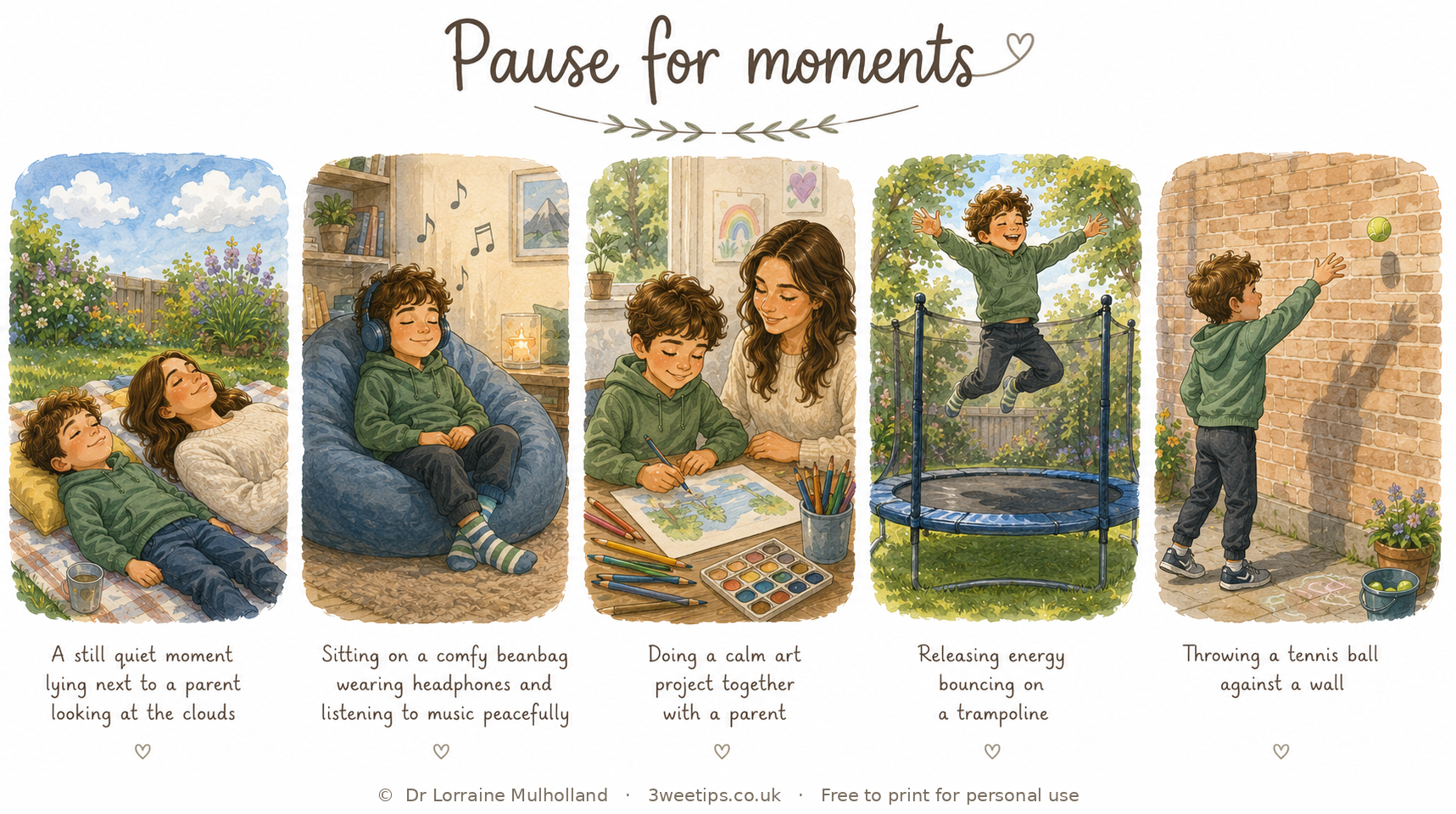
A wee collection of calm, everyday moments to enjoy together — little pauses that help small minds, and their grown-ups, feel settled, safe and connected.
© Dr Lorraine Mulholland
A wee collection of calm, everyday moments for school-aged children — gentle pauses that help growing minds feel steady, soothed and supported.
© Dr Lorraine Mulholland
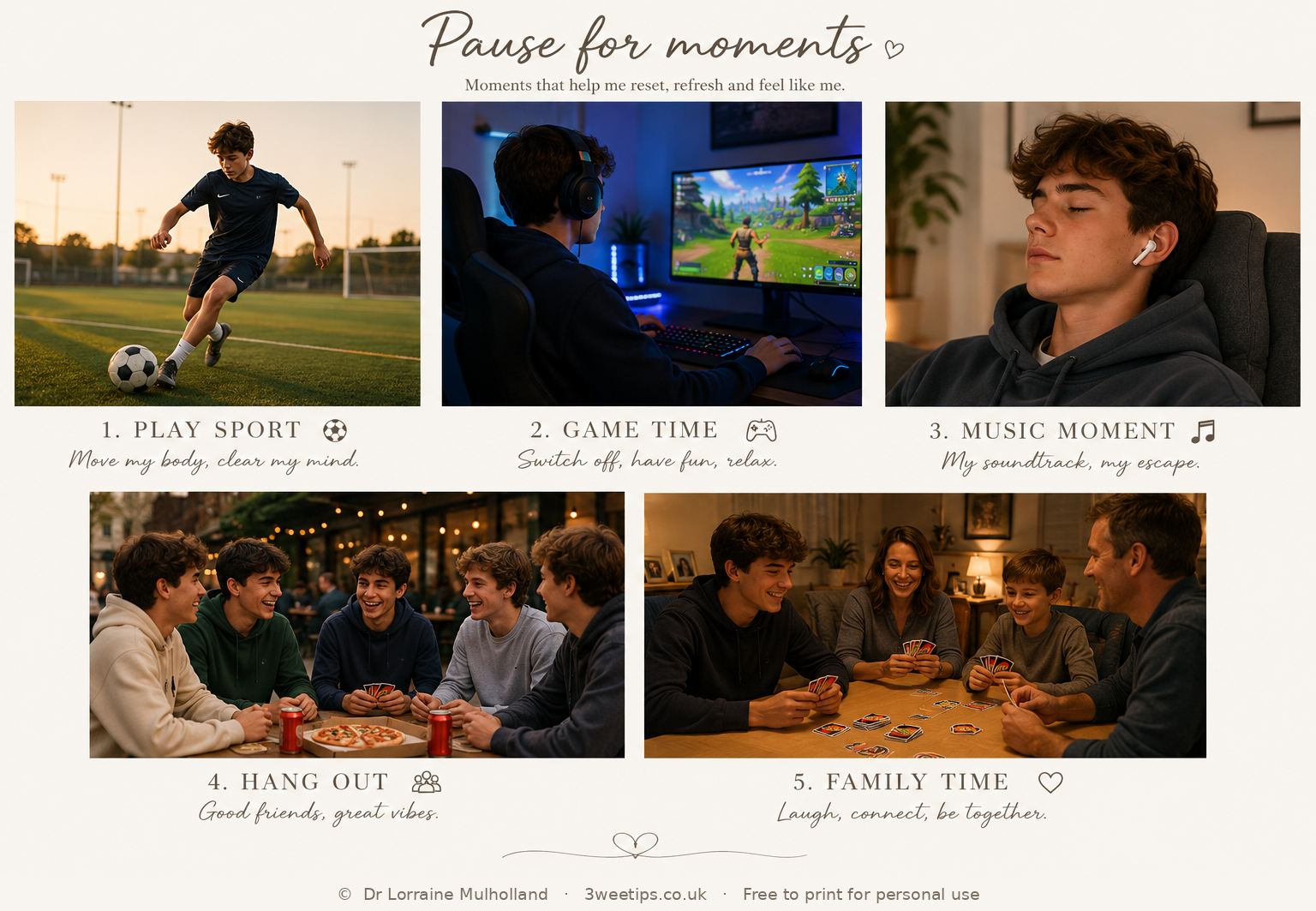
A wee collection of calm, everyday moments for teenagers — small pauses to slow down, steady big feelings, and be a little kinder to themselves.
© Dr Lorraine Mulholland
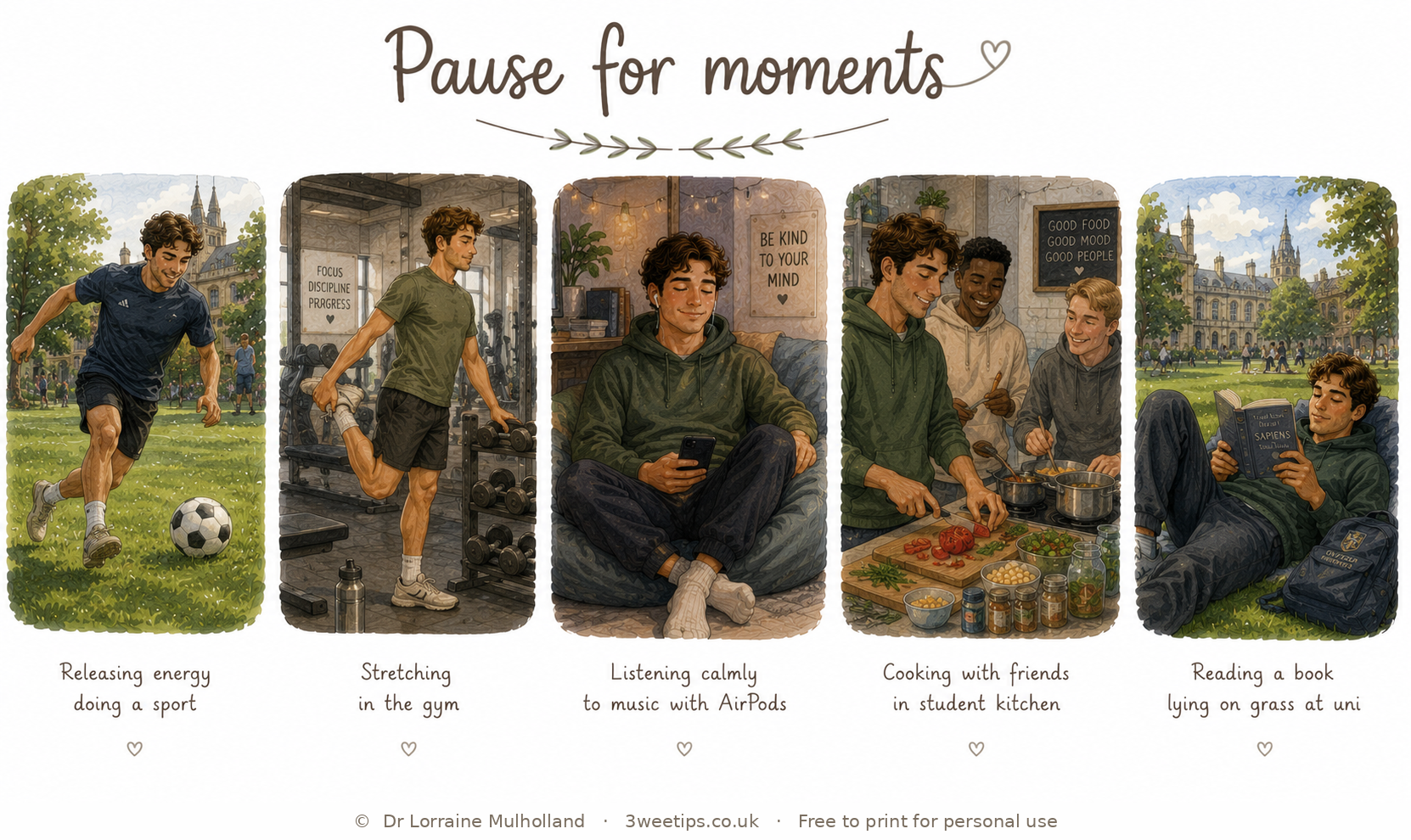
A wee collection of calm, everyday moments for young adults finding their feet — small pauses to steady yourself, recharge, and be kind to your mind.
© Dr Lorraine Mulholland
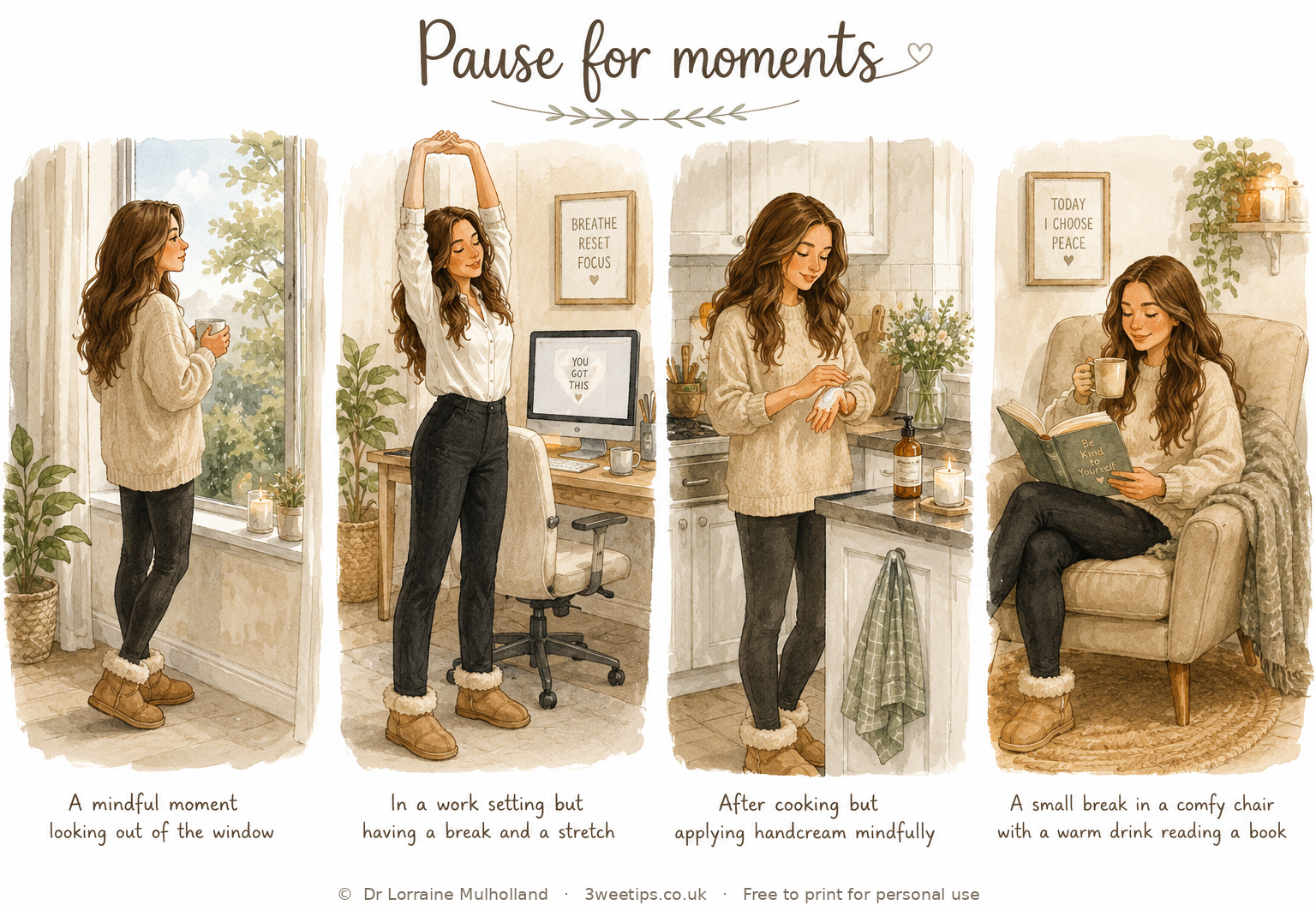
A wee collection of calm, everyday moments just for you — small pauses to catch your breath, refill your cup, and remember that you matter too.
© Dr Lorraine Mulholland
My child is struggling to make friends and feels left out. My child says they have no friends and doesn't know how to join in.
Help your child to feel an important and valued family member — this builds their confidence and reminds them how special they are. Give praise generously and often: "That was very kind sharing"; "Thank you for helping me tidy the toys"; "That was very clever."
Ask the teacher to help your child with joining in at playtimes and with paired working with other children in the class. Remember — all the children in the class will feel shy and upset at times and need some help.
Give your child ideas of what to say and how to join in with play. Arrange playdates, and always praise and encourage every effort, however small.
Children at this age often feel very upset if someone is bossy or they feel left out. They are all beginning to learn that friendships are two-way, and they feel unsure at times about what to do or say to make things better. Gentle encouragement to take those brave little steps will help them to feel safe to have a go and join in again.
© Dr Lorraine Mulholland
"A short video — coming soon."
Video will appear hereMy child worries a lot and gets anxious about everyday things.
Help your child by encouraging them to have a go, suggest small achievable targets and allow them to build confidence gradually.
Model a "have a go" attitude yourself.
Always praise and reward efforts, however small.
Confidence grows through tip-toe steps — trying, wobbling, practising and learning.
© Dr Lorraine Mulholland